STACBOND Scenarios: Pas-de-Calais Departmental Archives: When Architecture Protects History
How do you design a building capable of preserving centuries of history… while projecting a recognizable contemporary image?
In northern France, the new Archives départementales du Pas-de-Calais, designed by renowned architect Philippe Prost, respond to this question through an architecture that combines technical precision, environmental control and an envelope with a strong visual identity.
A project where the façade is not just design: it is an active part of the building’s performance.
A building designed to preserve memory
The departmental archives house thousands of historical documents that require extremely stable conditions for their preservation: controlled temperature, constant humidity levels and minimal exposure to light.
To meet these requirements, the building is conceived as a compact, efficient and protected volume, where every construction element contributes to ensuring the durability of its contents.
In this context, the envelope plays a fundamental role: it not only defines the building, but also helps create the necessary conditions inside.
Photography: Maxime Navateur
Ventilated façade and environmental control
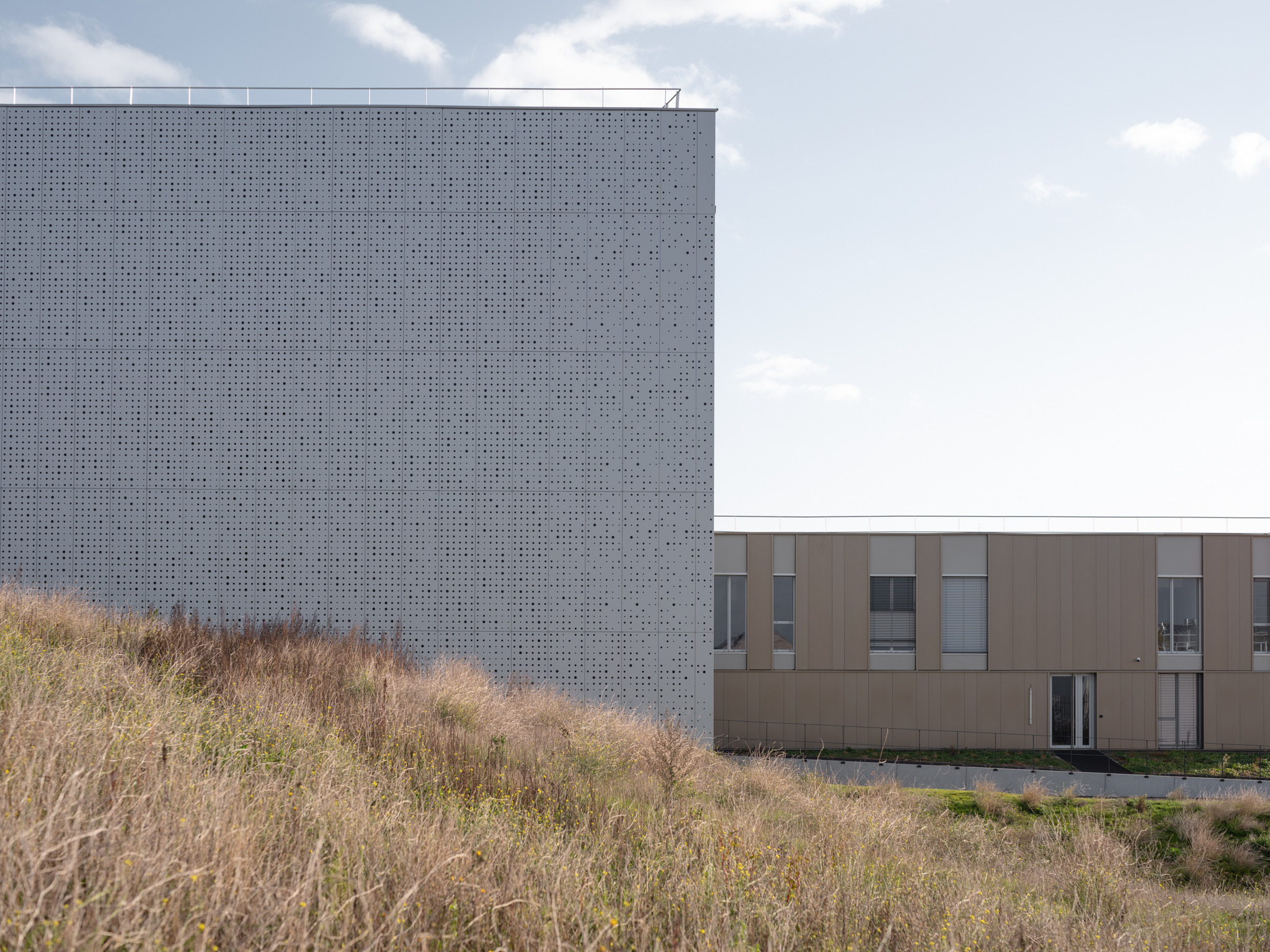
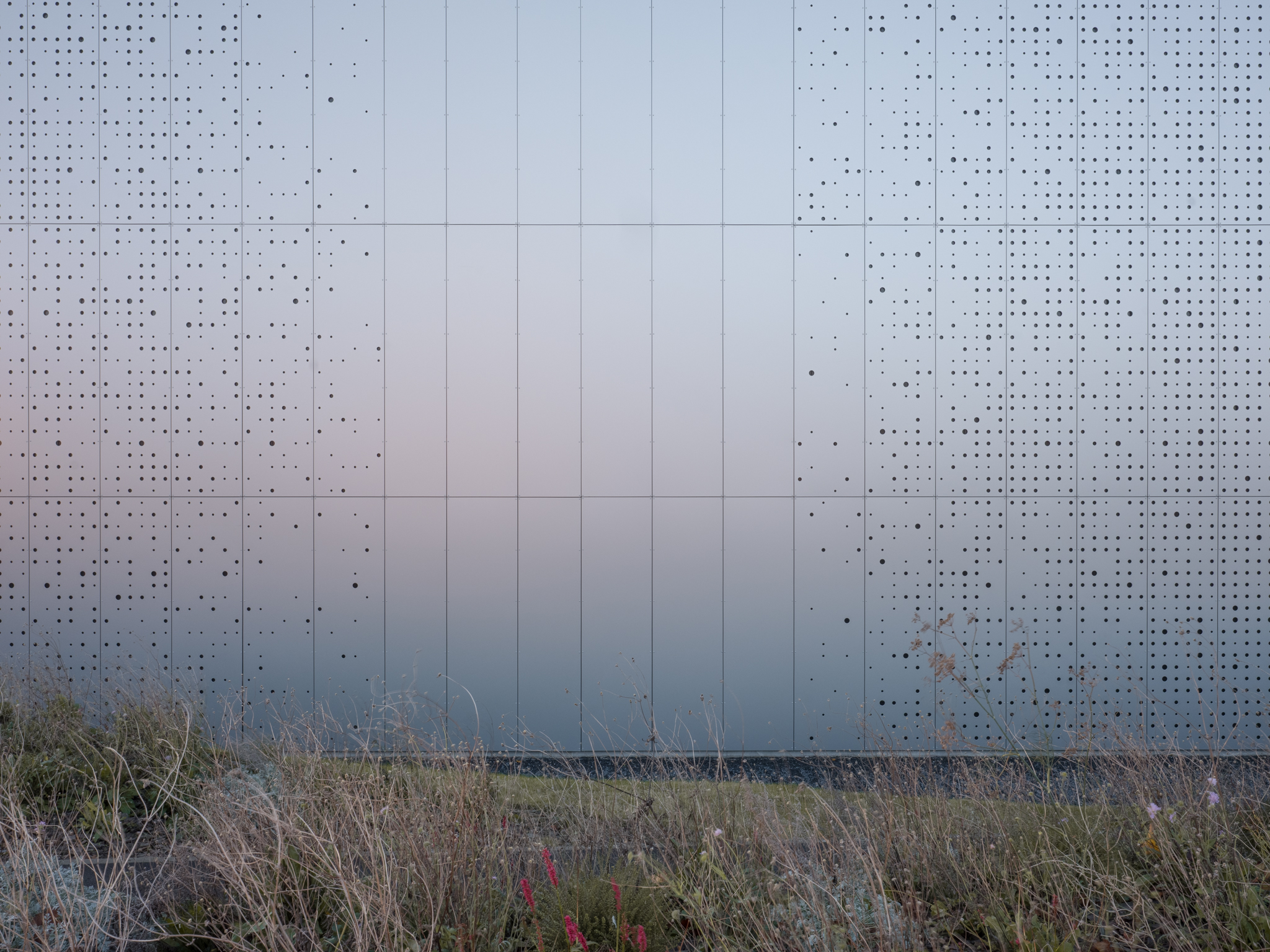
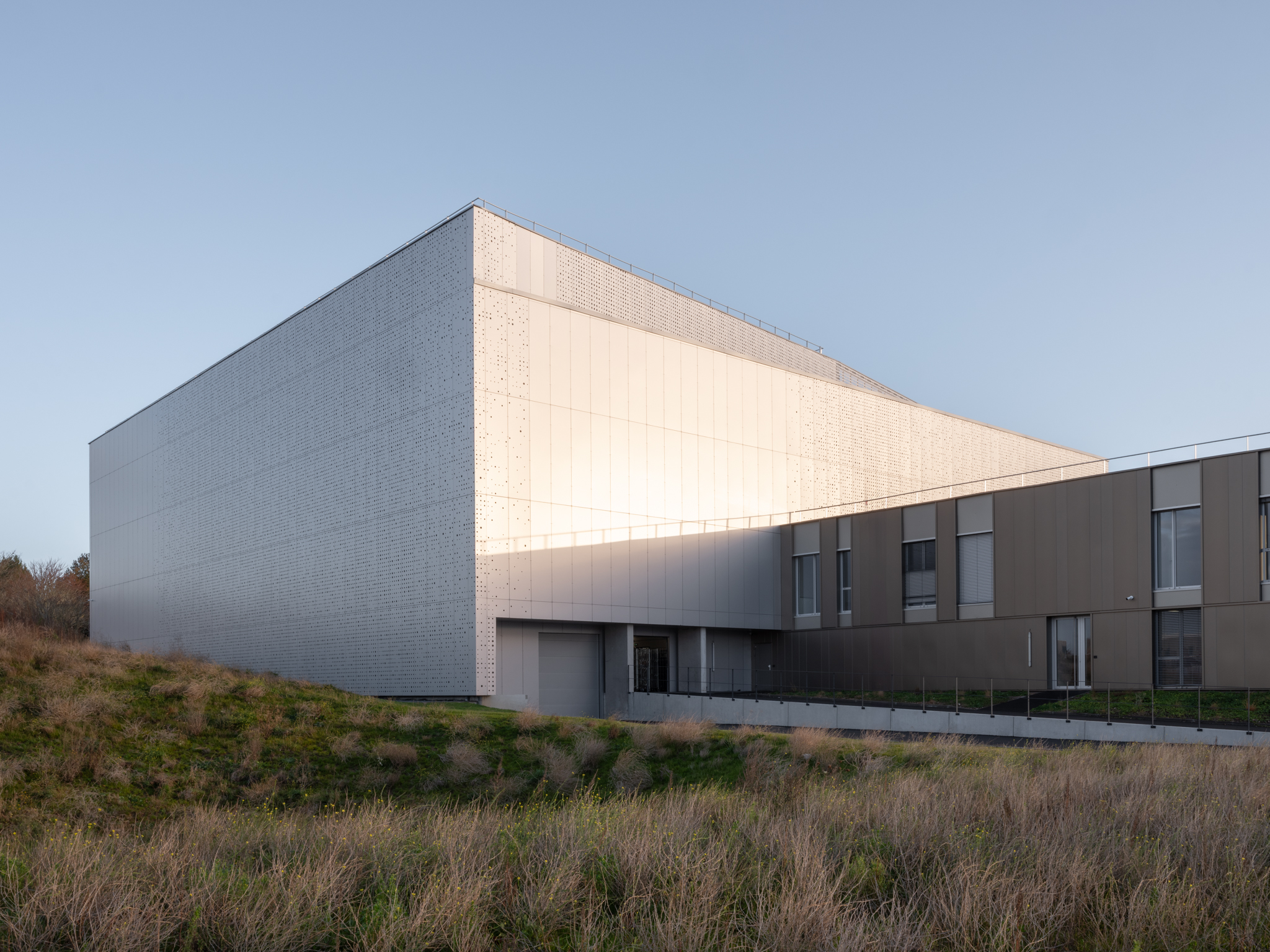
The main building is fully clad with riveted STACBOND panels, combining solid and perforated surfaces in a solution that balances technical performance and architectural expression.
This configuration allows:
- Reducing direct solar radiation
- Filtering natural light
- Improving the building’s thermal performance
- Protecting the interior from climatic variations
The ventilated façade acts as an efficient second skin, key to the overall energy performance of the building.
A building committed to its environment
Beyond its technical performance, the project incorporates advanced sustainability criteria.
The new construction aims to achieve the high-performance level of HQE Bâtiment Durable certification, even reaching an excellent level in aspects such as ecology and electromagnetic wave control.
In addition, the building is developed on previously urbanized land, promoting its regeneration. Part of the site has been revegetated, reducing the urban heat island effect by approximately 29%.
In terms of energy efficiency, the project integrates electricity production through photovoltaic panels on the roof, helping to offset its energy consumption.
Materiality and dialogue between volumes
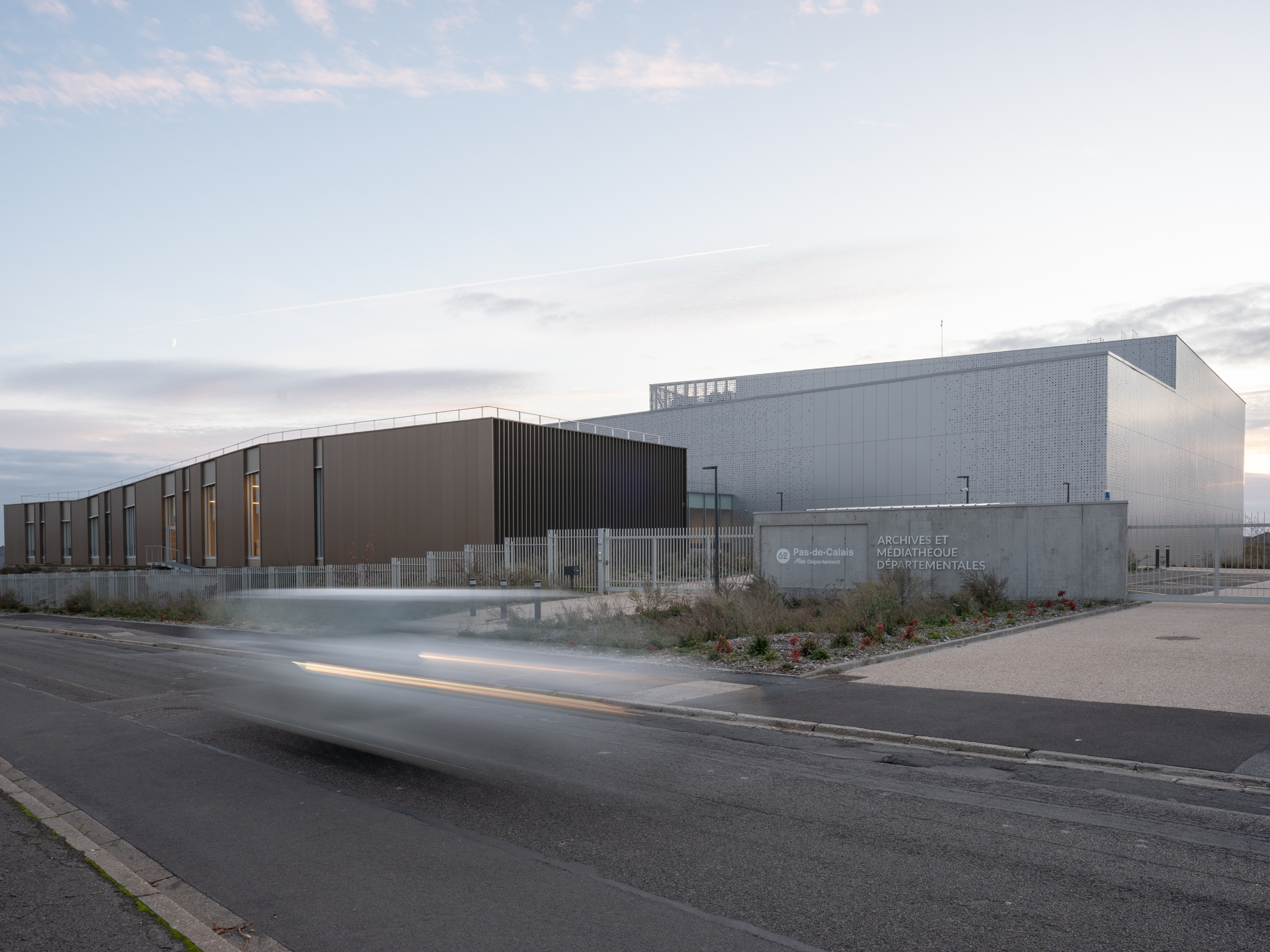
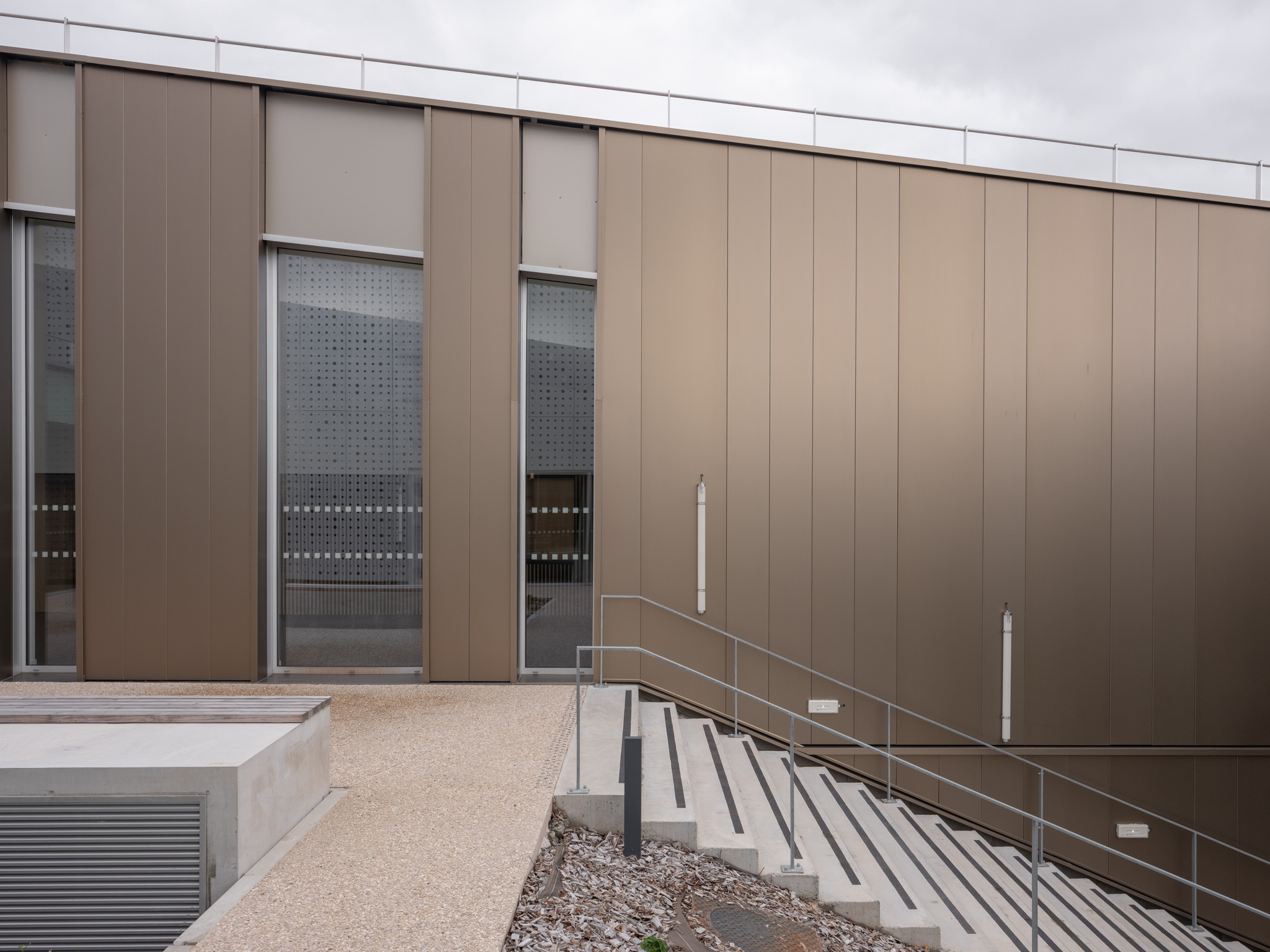
The architectural complex is completed with a second building in a bronze finish, providing a more human and representative scale.
The contrast between both volumes — one more compact and technical, the other more open and warm — reinforces the reading of the project:
- The archive → protection, stability, control
- The secondary building → access, interaction, public use
This duality allows the project to be understood not only as a container, but as a space that engages with its function and with people.
A project with institutional value
The Archives départementales du Pas-de-Calais project is part of one of the most relevant initiatives of the department in terms of preserving documentary heritage.
Beyond its architectural dimension, the building represents a milestone due to the complexity of its implementation and its strategic role in the long-term preservation of historical archives.
Project data
- Approximate surface area: 3,000 m²
- 2,850 m² → STB-403 / Silver Metallic
- 160 m² → STB-406 / Bronze Metallic
- Material: composite panel
- Core: FR
The material transformation was carried out by ORIGA COMPOSITE, adapting the composite panel to the specific needs of the architectural design.
Architecture beyond design
The Archives départementales du Pas-de-Calais demonstrate that technical architecture does not have to be invisible.
Because when the envelope is designed with intention, it stops being a boundary… and becomes an active tool of architecture.
Discover more about our solutions
👉 Discover all STACBOND finishes: https://stacbond.com/en/acabados/
👉 Learn more about our installation systems: https://stacbond.com/en/assembly-systems/
Source: Archives départementales du Pas-de-Calais: behind the scenes of the relocation (YouTube)